ILTER2027
Speakers
San Carlos de Bariloche, Patagonia – Argentina
March 8-12, 2027
Dra. Angelina Martínez-Yrízar
angelina@unam.mx
Angelina is a researcher at the Instituto de Ecología, Universidad Nacional Autónoma de México (UNAM) since 1989. She received her Master’s degree from UNAM with a dissertation on the temporal patterns of litterfall and litter decomposition in the tropical dry forest of the Chamela reserve.
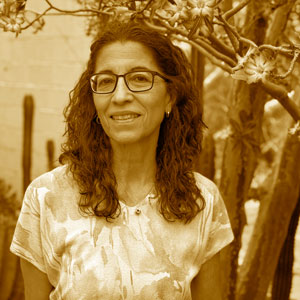
She earned her PhD at the University of Cambridge, England, where her dissertation focused on primary productivity and leaf traits of chalk grasslands in Cambridgeshire. Her research interests center on understanding the structure and functioning of water‑limited ecosystems, particularly the Sonoran Desert and tropical dry forests in Mexico. Her work has addressed topics such as ecosystem biomass, primary productivity, decomposition, and nutrient cycling.
She has also studied plant mortality and drought resistance in woody species of the Sonoran Desert, the effects of selective cutting of non‑timber forest species on biodiversity in tropical dry forests, and the mechanisms of forest regeneration.
Since 1982, she has been responsible for the study of primary productivity in the Chamela forest, as part of an ongoing long-term ecological project. This research has enabled the research group to assess the magnitude of the temporal and spatial variability of litterfall and nutrient cycling, as well as the ecosystem’s responses to severe droughts and hurricanes, providing insights into its resilience to extreme climatic events.
Marcelo Sternberg
Tel Aviv University, Israel
Marcelo Sternberg is a professor at Tel Aviv University, Israel, specializing in experimental ecology and the impacts of human activities and global environmental change on natural and agricultural ecosystems.
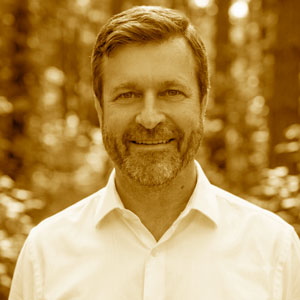
He studied at the Universidad Nacional de Córdoba in Argentina and completed his PhD at the Hebrew University of Jerusalem. His research focuses on climate change, biodiversity, plant ecology, ecosystem functioning, and agroecology.He leads one of the world’s longest-running rainfall-manipulation experiments in Mediterranean shrublands, examining how extreme drought and altered rainfall patterns affect ecosystem functioning and soil processes.
Through long-term experiments and international collaborations, his work advances our understanding of ecosystem responses to global change and contributes to more sustainable ecosystem management. He has published extensively in leading international scientific journals.
Carolina Morales
Carolina Laura Morales is Independent Researcher of the National Research Council of Argentina (CONICET) at the Instituto de Investigaciones en Biodiversidad y Medio Ambiente (INIBIOMA) and Professor at the Department of Ecology, Universidad Nacional del Comahue in Bariloche, Río Negro.
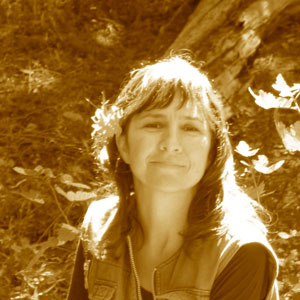
Her field of research involves plant-pollinator interactions, pollination ecology, apiculture, and biological invasions. She has devoted more than two decades in studying the multiple and long-term ecological impacts and drivers of bumblebee invasions in South America.
Her research interests also expand to apiculture and their interactions with landscape, floral resources, climate change, pathogens, and pesticides. She has co-founded the Sociedad Latino Americana de Investigación en Abejas (SOLATINA) and has actively participated in the IPBES Assessments on Pollination and on Invasive Alien Species. She aims bridging the gap between science, society, policy, and politics.
Nancy B. Grimm
is an ecosystem ecologist who studies the interactions of climate change, human activities, resilience, and biogeochemical processes in urban and stream ecosystems. Grimm was founding director of the Central Arizona–Phoenix LTER, co-directed the Urban Resilience to Extremes Sustainability Research Network, and now co-directs the NATURA and ESSA networks, all focused on solving problems of the Anthropocene, especially in cities.
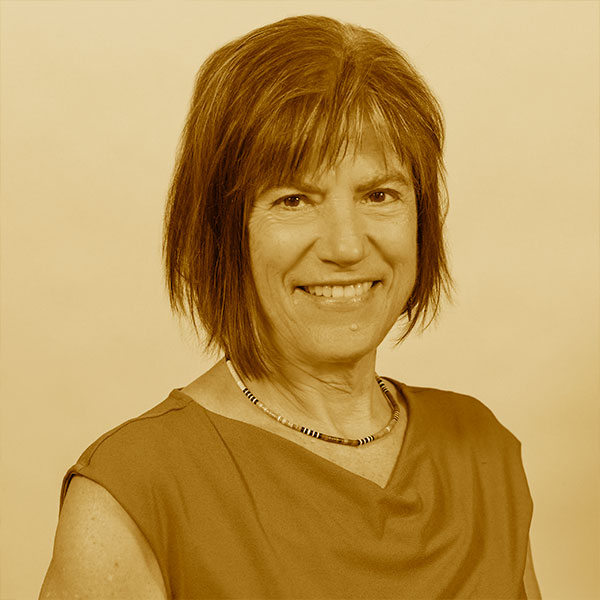
Grimm’s research centers on nature-based, technological, and governance solutions that can build resilience to a future with increased frequency and magnitude of extreme events. In streams, she studies how hydrologic and climatic variability influence ecosystem processes such as stream metabolism and nutrient dynamics, and more recently, the impacts of a novel desert disturbance (wildfire) on stream processes through hydrologic connectivity of upland to stream-riparian corridor.
Grimm is Past President of the Ecological Society of America and the Society for Freshwater Science, and Fellow of the American Association for the Advancement of Science, the American Geophysical Union, the Ecological Society of America, the Society for Freshwater Science. She is a member of the National Academy of Sciences and has made >250 contributions to the scientific literature with colleagues and students.
Alberto Yanosky
Biologist, M.Sc. in Methodology and Doctor of Sciences. Categorized Paraguayan researcher. Former member of the Council of national and international NGOs (BirdLife, IUCN, KBA), former Manager of the CYTED thematic area of Sustainable Development, Global Change and Ecosystems. Conservationist, broadcaster and communicator about nature and science.
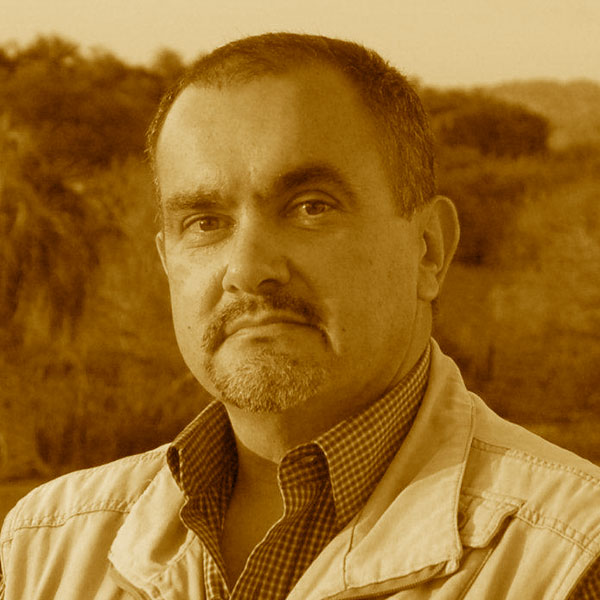
More than 38 years of professional experience and extensive experience in postgraduate teaching and consultancies at national and international level. Its areas of specialization are the conservation of nature and in particular biodiversity as well as adaptation to parameters, standards and socio-environmental and sustainability safeguards. Founder of several civil society organizations. He has more than 100 scientific publications and several books, chapters and other texts.
One of the most cited researchers in natural sciences in Paraguay. Referee of national and international scientific journals, Postgraduate Thesis Jury. He has several international awards. Co-author of the UN Report on Adaptation Gaps 2020 and also 2021, and “Protected Planet: Latin America and the Caribbean”. Commissioner of the Driving Group of the Research Ethics Committee of CONACYT, and Provisional Committee. Fonder and former Secretary of the Hub of Climate Sciences for Adaptation in Paraguay (ARAPY) and founder and former Vice President of the Association of Scientific Researchers of Paraguay (ADICIP).
Luisa Maria Diele-Viegas
is a Brazilian ecologist and transdisciplinary scientist whose work bridges biodiversity, conservation, and inclusive scientific collaboration.
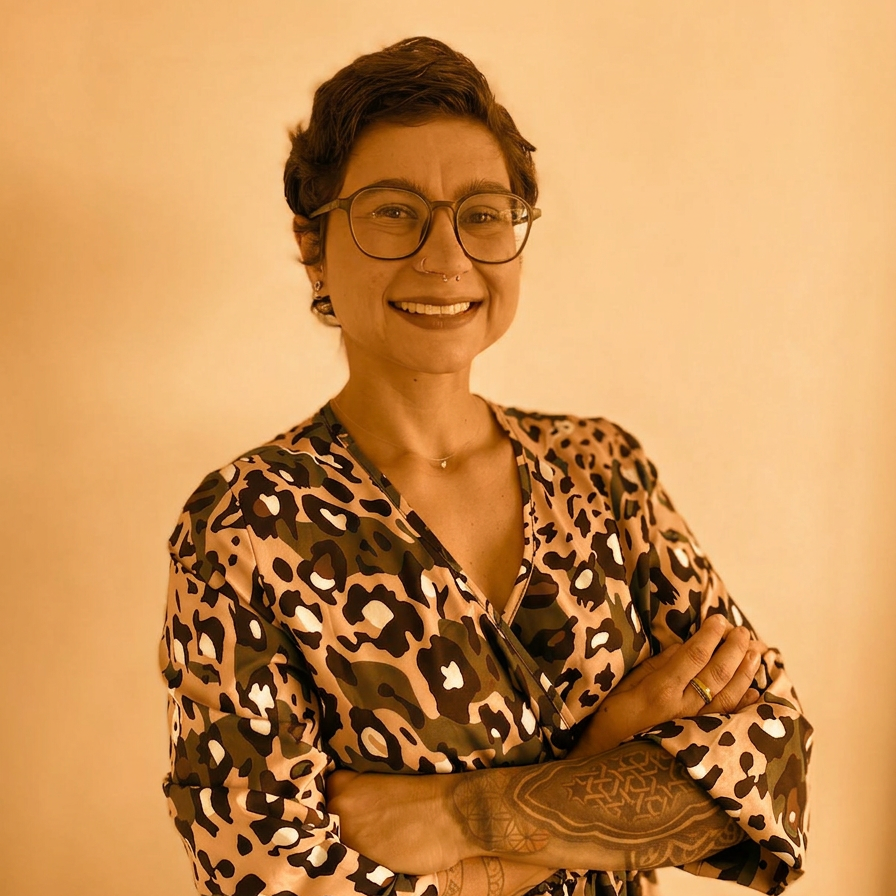
She is currently a Postdoctoral Researcher at the University of Michigan and a Courtesy Senior Research Associate I at the University of Oregon. Additionally, she is a permanent professor in the Graduate Program in Ecology at the Federal University of Bahia, Brazil, and a collaborator professor in the Graduate Program of Zoology at the State University of Santa Cruz, Brazil. She leads the BioDivA Lab, a decentralized and virtual research community designed to foster collaboration across disciplines, cultures, and geographies.
She serves as Chair of the Brazilian Association for Ecological Science and Conservation (ABECO; 2025–2027) and of the Brazilian National Chapter of the Organization for Women in Science for the Developing World (OWSD; 2025–2028), where she also serves as a Regional Member of the Executive Committee (2025–2029). She is President-Elect of the Society for Conservation Biology North
America (SCBNA; 2026–2028) and a Council Member of the European Society for Evolutionary Biology (ESEB; 2025–2029). She is a Young Affiliate of The World Academy of Sciences (TWAS) and a member of the Global Young Academy (GYA), where she coordinates Theme 2, Strengthening the Science and Research Ecosystem, and contributes to advancing equity, diversity, inclusion, and accessibility across research communities.
Her research integrates ecophysiology, ecological niche modeling, and conservation biology to understand how organisms respond to environmental change and to support evidence-based biodiversity governance. Beyond her academic contributions, she is committed to building open, collaborative, and transdisciplinary approaches that value local and traditional knowledge, aiming to transform how science engages with global challenges.